Monday, November 16, 2020

Respiratory Protection During Outbreaks: Respirators versus Surgical Masks

Respirators versus Surgical Masks

Consistent use of respirators improves protection against respiratory illness

In these times of the Corona pandemic, one of the foremost strategies are to protect medical professionals from getting infected by patients. One can achieve it by consistent use of respirators that block the infectious particles and viruses, thereby reducing respiratory infections. 

In a healthcare environment, N95 filtering facepiece respirators (FFRs) and surgical masks are the two most commonly used devices. As there is a shortage of N95 respirators now, it becomes imperative to understand the difference between surgical masks and the N95 respirators to have access to proper protection. 

FFRs are designed to protect the healthcare professional and surgical masks are designed for patient

N95 respirators

When we talk about the healthcare environment, respirators have been designed to protect the medical professionals, and surgical masks have been designed to protect the patients. N95 respirators block at least 95% of particles from inhaled air. The filtering facepiece respirators (FFRs) are regulated by the National Institute for Occupational Safety and Health (NIOSH), which is a part of the Centers for Disease Control and Prevention (CDC) within the U.S. Department of Health and Human Services. NIOSH has laid down stringent test conditions to measure the minimum filtration efficiency based on which the FFRs are categorized. To provide the expected protection levels, the FFRs must seal the wearer's face preventing air leaks. FFR acts as a physical barrier between the wearer's face and contaminated hands or gloves.

Surgical masks

On the contrary, surgical masks have not been designed to protect the wearer from airborne hazards. At best, they can only limit the spread of infectious particles expelled by the wearer. Surgical masks can protect a sterile area surrounding a surgical incision from contamination by particles expelled by the wearer that can be in the form of sneezes or coughs. Surgical masks act as a physical barrier to protect the wearer from sprays, splashes, or contact with contaminated hands. Surgical masks are not governed by stringent conditions on minimum filtration efficiency and they are loose fitting in nature.

N95 respirators offer greater protection than surgical masks if worn properly - Scientific studies 

The current COVID-19 pandemic has restarted the debate on which device should be the minimum level protection in the healthcare facilities - N95 FFRs or surgical masks. One should keep this fact in mind that respirators have been designed so as to reduce the wearer’s exposure to airborne particles. Respirators do not make any claims with respect to disease prevention. Properly fitted and worn N95 masks have a minimum filtration efficiency of 95%. Greater protection against aerosols is achieved by FFRs in comparison with surgical masks in the laboratory studies, however, the clinical studies have been inconclusive.

Thus during the time of crisis and mask shortage, it becomes very important to prioritize the distribution of N95 masks and limit their usage for protection against aerosols. Once the shortage ceases and the supply chain is back to normal, facilities with a respiratory protection program must follow the CDC and Occupational Safety and Health Administration (OSHA) guidelines. These guidelines and procedures have been described in detail in the Hospital Respiratory Protection Program Toolkit.


surgical masks v/s N95 respirators

There have been discussions on the comparative the ability of respirators against surgical masks to protect medical professionals against influenza virus that was published in the Journal of the American Medical Association’s article, “N95 Respirators versus Medical Masks for Preventing Influenza Among Health Care Personnel: A Randomized Clinical Trial (ResPECT)”. No significant difference was reported, when a number of incidence of laboratory-confirmed influenza was compared among outpatient health care personnel, participants on trial with surgical masks v/s N95 respirators. ResPECT was conducted at a randomly selected 137 outpatient study sites at seven U.S. medical centers between September 2011 and May 2015, followed by a final follow-up in June 2016. The aim of ResPECT was to measure the effectiveness of an intervention under routine clinical conditions. One limitation of the study was that although the FDA has cleared 500 N95 FFR models and 200 surgical masks, ResPECT studied only two  N95 respirators and medical mask models. It would not be correct to generalize about the protectiveness of other models on the basis of these two models. Due to the absence of performance requirements for surgical masks regarding environmental aerosol filtration capability and no requirement of fit testing, less than 1% of surgical masks were cleared by the FDA. 

Personal protective equipment worn inconsistently by healthcare professionals reduces protection

There has been a constant debate over the use of respirators versus surgical masks by healthcare professionals. The main bone of contention in this debate is that the PPEs including the respiratory protection cannot protect the users effectively if they are not used consistently in a proper manner. 

Healthcare professionals have been reported to be inconsistently using personal protective equipment, substantially leading to reduced protection. More than 12 observational studies have proved that healthcare professionals are not using protective equipment frequently and are not removing the respirators correctly. They have been seen to take off their respirators when they should be wearing them or have been observed not to wear them at all when required. 

Authors conducting trials in ResPECT found that only 35% of medical professionals either never used surgical masks or respirators or used sometimes. This led to the conclusion that this incomplete adherence to the use of surgical masks or respirators had caused unprotected exposures, thereby leading to an increase in the probability of discovering no differences.

Adherence to infection control can be increased with observation, metrics, training, and reinforcing safety culture

The ResPECT study conducted among healthcare professionals could not definitively prove whether there was any practical difference in the protection provided by surgical masks v/s N95 respirators. However, the study emphasized an important opportunity for prevention.  This was the enhancement of the safety culture, which would improve adherence to infection control recommendations. 

One must realize that understanding and addressing the core reasons for non-compliance will go a long way to improve the safety culture. The compliance of proper PPE usage improves depending on the level of health risk the worker perceives, such as exposure to influenza v/s tuberculosis (TB) or the Ebola virus. Hence, to ensure consistent compliance, a safety culture emphasizing daily worker safety and training must be established. The behavior leading to non-compliance can be corrected with training, making observations, collecting metrics, and reinforcing the safety culture. The Hospital Respiratory Protection Program Toolkit issued by NIOSH details this belief that routine compliance increases preparedness during a public health emergency.  

Healthcare professionals will have to follow the two main steps when they are formulating and implementing respiratory protection program policies. Firstly, they have to be aware of the best practices and secondly, strike the right balance between their own safety and factors associated with patient care. 

For more information visit our website www.rhysley.org.


Thursday, September 17, 2020

Differences Between KN95 Vs 3 Ply Disposable Face Masks: Which One Should You Wear?


As the year 2020 revolves around the terms Coronavirus and Covid-19, the world resorts to face masks to prevent the spread of the disease. Currently, there are different types of face masks available from the top face mask manufacturer & distributors in the market. For effective protection, it is important to choose the right one. Let us checkout the key uses and differences between KN95 and 3 Ply face masks to understand which one meets your requirements.

3 Ply Disposable Masks

3 Ply Disposable Face Mask

3 Ply Disposable Face Mask

These sky blue hued masks are readily made available in the market by the face masksuppliers. The masks contain 3 layers and hence the name, 3 ply. According to FDA (Food & Drug Administration), these masks should be used by civilians and people under non-medical environment. These are cheap face masks and enable approximately 70-90% dust and germ filtration. So, when respirators are unavailable, it is better to put on 3 Ply face masks than nothing at all. According to tests, surgical or 3 Ply face masks are resistant to fluids. The masks do not come with a pressure seal. Last but not the least; 3 Ply masks are one time wear and should be properly disposed after every use. You should also be careful not to touch your face, nose and mouth when removing the mask. These face masks are easily accessible.

KN95 Face Masks 

Rhysley KN95 Masks

Rhysley KN95 Masks

First of all, KN is the Chinese standard for masks. These masks are known to filter approximately > 95% of tiny particles (which is equivalent to 0.3 micron particles). These masks have a flow rate of 85L per minute.


Some additional features of KN95 masks as compared to 3 Ply or surgical masks are-

* Light Weight

KN95 masks are light and breathable. For this reason, these masks are an easy wear for long hours.

Non-Allergic
According to tests, KN95 masks are non-toxic and non-irritating. These face masks are free from latex and hence can be worn by anyone and everyone.

Easy To Wear

These masks come with a tip-shaped hanging ear design. For this reason, KN95 facemasks do not easily slip off from the ears. These masks come with a silicone adjustable nose clip. So, you can easily adjust the sealing. This protects the glasses from fogging when you wear a mask.

Water Proof

These masks are safe to be worn even during monsoons. KN95 masks are resistant to water and humidity and hence offers added protection.

Reusable

Face masks have become a necessary accessory. So whenever you go out or are in contact with other people, it is mandatory to wear a mask. KN95 masks make your life easy as you can reuse these face masks. Made from elastic fabric, these can be reused after handwash. Last but not the least, these face masks do not have any smell.


If N95 masks are not available, KN95 face masks may be used as an alternative. The difference between N95 and KN95 masks are considered subtle. It is important for everyone to wear face masks; whether the individual is a Covid-19 patient or not. So, choose your face mask wisely. For more information visit www.rhysley.org or call us @ 001-587-441-3737 or +91 89299 00031.  

Tuesday, August 18, 2020

Face Mask Types and Their Differences: Surgical, FFP1, FFP2, FFP3 and More

The only thing certain about this pandemic is that we have to get used to wearing masks for the foreseeable future. Until there is a vaccine for COVID-19, the best way to protect yourself and others is by wearing a mask. This means it is important to understand the different types of masks in the market so that you pick the right one for your needs. There is a heated debate about face masks and its effectiveness. The use of face masks is highly encouraged by all countries around the world and this is why it is best to know about different types of face masks available and how they differ from one another. Before you buy a face mask, it helps to know what you are buying and how it will help you.


Let us discuss the different types of masks in the market including the FFP3 mask and FFP2 mask, non-medical fabric masks and surgical face mask. Listed below are the main types of masks available today. 

      Fabric hygiene masks for non-medical use

      Surgical masks

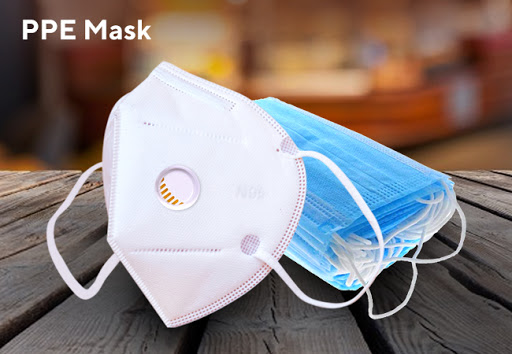
      PPE masks (FFP1, FFP2, and FFP3 masks)

      N95 and KN95 masks

      Filtering masks


Fabric hygiene masks for non-medical use

The best feature of fabric masks is that they are washable and re-usable. They are ideal for non-medical use and are not certified. There was a time when there was a huge demand for masks but the supply was scarce. This is when a lot of firms converted their production lines to manufacture hygiene masks. The mask will cover your mouth and nose but you also need to maintain a distance of at least two meters from others even when wearing the mask. The mask is not a medical-grade but will help prevent the spread of the virus. It will filter out most droplets expelled from the mouth and nose. 


Many countries recommend people to wear some sort of protection even if it is non-medical grade. It is a low form of protection that will work as a barrier against the spread of the virus. It will also reduce the waste associated with disposable masks and gloves.

Surgical masks

Surgical masks are more effective than fabric masks. They are commonly used and are available in blue color. They protect patients from potential contact with viruses and bacteria exhaled by the wearer. These masks filter the air expelled from the mouth and nose. It has a filtration efficiency of 95% and is considered ideal for limiting the spread of saliva droplets that are expelled when you talk, sneeze or cough. 


Surgical masks are used by medical professionals as they are ideal for preventing the spread of the virus through the air. It is important to follow social distancing when wearing the mask. The mask should fit well and it must completely cover the mouth and nose. They are only for single-use and should be thrown away after about four hours of use.

PPE masks (FFP1, FFP2, and FFP3 masks)

PPE (personal protective equipment) is worn by medical staff in the hospitals and it provides a very high filtration level. It is much more efficient when it comes to filtering for inhaled and exhaled air than surgical masks. FFP means filtering facepiece and it shows that the mask has met the EN 149-2001 standard. It is the minimum performance criteria for structural stability, breath-ability, biocompatibility, and efficiency. FFP has a numbering system that shows the filtration efficiency of the devices. 


An FFP1 mask has a limited filtering capacity and will only filter out large particles. They are not suitable for protecting the wearer from harmful microparticles which carry the virus. FFP2 has a slightly higher filtration efficiency for airborne particles which is around 92% and FFP3 has 98%. The most effective masks are valveless FFP2 and FFP3 masks because they offer maximum protection for the wearer and others. A valve will expel the wearer’s exhaled air without filtering it which is why it is not recommended by those who have symptoms. 

The drawback of the FFP3 mask is that it has a high level of filtering and layering which makes the wearer uncomfortable when worn for a long period of time. The mask also has a limited lifespan and they are designed to provide protection for six hours, after which they need to be disposed of. 

N95 and KN95 masks 

N95 and KN95 masks are similar to FFP2 make and they offer a high level of protection to medical professionals. These ratings of N95 with respirator and KN95 with respirator are certified to Chinese and American standards which are similar but not the same as European mask standards. For the efficiency of the respirator, they need to carry the CE mark. It means that the mask has been tested for efficiency and meets the EU standards. Hence, if the mask has a CE mark, its efficiency is equal to FFP2 masks. 


Filtering masks 

The filtering mask has high comfort and filtration efficiency and is manufactured with the latest technology. It is reusable and is made out of three fabrics. The mask provides 95% filtration efficiency for fine particles and bacteria. The three layers form a mechanical barrier against the microparticles and protect the wearer and those around them. It has replaceable filters that last 12 hours and is a dust protector. 

After wearing the mask for 12 hours, you do not need to replace the mask but replace the filter. The mask can be washed in warm water with soap. It is available in different colors and patterns and offers a high level of protection. It has a long life and reduces waste associated with single-use masks.


For more information visit www.rhysley.org or send an email to sales@rhysley.org. 


Monday, June 22, 2020


Why Masks Will Likely Be Necessary at Work Until 2021

Facemasks have become a part and parcel of life during the Covid-19 pandemic. Experts suggest that Covid-19 patients and non-affected individuals all should wear masks. Why? Because while patients may spread the disease when sneezing or coughing, others may be affected by the germs spread through contact with coronavirus affected patients. So, as offices open, it is important to wear face masks. But for how long? Well, experts believe that it may be important to wear face masks to work even in 2021. Why? Because the Vaccine Is Yet To Come


The vaccine data that is currently available from the Oxford University, Covid-19 vaccine may be available during the winters. So, it can be stated that the immunity herd may be available some months after that. For this reason, experts suggest that it is 12-18 months more that people have to wear face masks to work.

Now the next question arises, how natural will it be to wear face masks to the office? How will call center executives to take calls putting on face masks? While with masks on, the words may garble, without the mask there are chances of infection. So, there is a need to revamp the workplace culture. Wearing N95 respirators and keeping a distance of at least 6 feet can keep the disease at bay.

Now, as it is clear that it is important to wear face masks to work, buy these in bulk. The top face mask manufacturer in India offers you affordable surgical masks. Choose face masks that

  • Properly fit with your face and are waterproof
  • Ensures easy breathing and are comfortable to be worn for long hours
  • Come with several layers and are effective in filtering air-borne germs and dust particles   
So, now do not worry about going to work. Buy an N95 respirator from top face mask manufacturer in India and ensure safety of yourself and your loved ones.


We are face mask manufacturer, our  factory has the capacity of manufacturing half-million masks per day, for more information, visit www.rhysley.org or call us @ 001-587-441-3737 or +91 89299 00031.


Certified by


Tuesday, June 2, 2020

WHAT IS MELT-BLOWN EXTRUSION AND HOW IS IT USED FOR MAKING MASKS?

Covid-19 has popularized the use of face masks. The high-quality face masks available from top face mask manufacturers are considered both comfortable to use and effective. These masks (3 ply face mask or KN95/N95 Face Mask) are generally manufactured using the melt-blown extrusion process. In this one-step process high-velocity air is blown through the molten thermoplastic resin from the extruder dye tip onto a conveyor or takes up the screen to form a finely fibrous and self-bonding web. It helps to produce the non-woven fabric. This kind of fabric is created by bonding the material mechanically, thermally, or chemically. The following features make the fiber manufactured through melt-blown extrusion ideal for face masks. 

Melt Blown Fabric
  • Absorbency- This melt-blown fabric is known for its absorbent, elasticity, and high filtration properties. It is quick to pick up oil and other unwanted objects. Hence the air you inhale through the fabric is devoid of air pollutants.
  • Bacterial barrier- Due to its high absorption and filtering property, the face masks are also considered as great at preventing bacteria. Experts suggest that Covid-19 patients wear face masks. This will help to prevent the spread of coronavirus through cough and sneeze.
  • Breathable- The best part, while the mouth and nose remain covered under this face mask, this kind of fiber is extremely breathable. This makes the masks manufactured using the melt-blown process ideal for long time wear.
  • Cushioning- The melt-blown fiber is soft. So, when you wear the face masks, it acts as a soft cushion on your nose and mouth.
  • Stretchable- The melt-blown fiber is stretchable. Melt-blown adds extra strength to the fiber. For this reason, face masks made with this high-quality fiber fit on any face.
  • Washable- The melt-blown fabric is ideal for multiple washes. For this reason, it is used to manufacture face masks that can be washed after every use. This type of fiber is also great to manufacture a disposable 2 ply face mask.
The melt-blown fabric is also known for flame retardancy, liquid repellency, resilience, and sterile properties.
The key steps followed in the melt-blown extrusion process are
  • Resin Feed System- The thermoplastic resin is the primary material used to manufacture the face masks. The first step is to store the material in the resin bag and is then fed into the extruder hopper.
  • Extruder Assembly- In this step the pellets are received from the resin fed system.
  • Metering Pump- The pump delivers a clean poly mix to the die assembly. It is also accountable for process variations in pressure, temperature, and viscosity of the molten polymer.
  • Melt Blown Die Assembly- Under this step, the die assembly ensures that there is uniformity of the manufactured melt-blown fiber.
  • Collector-The collector speed is changed to modify the density of the fiber. This step helps to modify the fiber density and make it usable for different applications.
  • Winder Unit- In this step, the cooled fabric is wound on the cardboard. In this process, the fiber is strengthened. This makes the fiber apt for manufacturing medical and surgical masks.
While the process steps remain the same, the material, temperature, and the collector speed can be modified to manufacture customized melt-blown fabric. The multi-layer face masks are hence manufactured following the melt-blown process. We are face mask manufacturer, our mask manufacturing factory have capacity of half a million mask per day, to book bulk order please visit www.rhysley.org. We also sell face mask machines, full or semi-automatic 3 ply mask making machines & KN95/N95 mask making machines are available for sale.

Know the Filtration Mechanisms of N95 Masks

  The present COVID situation has presented with the most dangerous situation and it is important to use the best-in-line masks. We are ta...