Wednesday, October 20, 2021

When Protective Gears Become Fashion Statement-The Journey of a Mask

The cliche goes that prevention is always preferable to cure. This statement is more relevant today than at any other time in the past since the only choice we have is to avoid COVID variations. The best way of protection is to wear certified masks purchased from a neighbouring health centre or medical supply store. Fashionistas and well-known designers around the world, such as Masaba Gupta and Ritu Beri, have devised a novel approach for creating fashionable masks for pivotal moments.


The voyage of masks, on the other hand, comprises several fascinating stages that have an impact on the health, fashion, and travel industries. Indeed, it aids in the discovery of creative individuals or groups who can invent new ways to employ masks for different people with diverse interests. Let us dig deeper into this fascinating voyage of masks:

Historical clues from the past

Humans have worn masks for thousands of years all across the world. Let us take you on a journey back in time to the dawn of civilization. Meanwhile, imagine a damsel in distress inside a magnificent palanquin, her face hidden under a silk veil. From the 17th century through the mid-twentieth century, plague doctors wore costumes with beak masks. These portrayals should take you on a journey through the history of masks up to the present day.


Masks, on the other hand, have taken on a new meaning as part of the performance, disguise, and entertainment, in addition to protection and style. They've been employed in both ceremonial and performing arts settings. Masks are worn in a variety of cultures for all kinds of celebrations and events.


What changed before and after COVID?

Masks were not widely used until the COVID-19 Pandemic struck the world. Surprisingly, no matter how many viruses people have encountered in the past, this one is unavoidable. Only a few persons with infections, allergies, or breathing issues were seen using masks at the time. People may also wear masks to protect themselves from breathing polluted air. Prior to COVID, life was unquestionably carefree, heedless, and unrestricted.

Unfortunately, the Corona Virus Outbreak in the year 2020 threw the world into full chaos. The world had to quickly shut down its routine ways of going about things and entered a paranoid phase. Soon, it was discovered that masks are an essential part of the armour for fighting deadly infections. As a result, it has evolved into a new legal entity tasked with keeping a person safe and secure to buy surgical masks and N95 masks to protect against all odds.

Masks as a fashion statement

Brides and grooms wearing bright blue surgical masks on their wedding day is a nuisance. As a result, the global creative community has come up with one-of-a-kind solutions, masks for every occasion. These trendy masks are really valuable. Let's have a look at what they are:
  1. Transforms a monotonous environment into a vibrant one.
  2. Does not add to the bride and groom's boredom.
  3. Assisting overworked medical front-line workers in addressing the expectations of mask purchasers was made easier.
  4. A necessity fit for the outfit-obsessed individuals.

Wednesday, October 13, 2021

Complete Guide of the Processes Involved in Face Mask Manufacturing

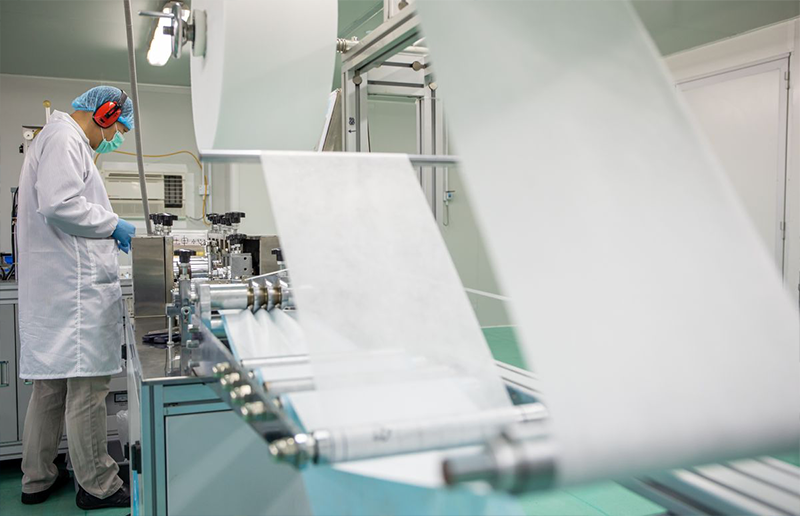
Surgical masks, N95 masks, and KN95 masks are always in limited supply (The N95 equivalent of China). The majority of people believe that the methods involved in making a face mask by a face mask manufacturer are highly complicated, which is why there is a scarcity. As a result, it's critical to understand the mechanisms required for mask manufacturing.


Face mask manufacturing processes

1. Combining:
Three distinct non-woven textiles were layered neatly together by the laminator above on the production line's permanent support. A trumpet-shaped feeding port is located here, and a string of wires is continuously fed into the laminating machine through the trumpet.
 
2. Stitch: When wearing the mask, the nose clip must be pinched to the bridge of the nose in order for the mask to be secure and the protective effect to be maintained. The wire must be matched and conveyed down one side of the non-woven fabric, then the next edge must be rolled, the back must be stitched, and the wire must be stitched in.
 
3. Folding mask: Masks for adults are all the same size. It is ensured that different persons have the appropriate size needs in order to wrap the nose, lips, and chin to the maximum extent possible. It must then be flattened using a roller machine to create a crease for improved processing in future procedures. After that, it's trimmed down to a single mask unit.

4. Strengthen: This stage necessitates the use of additional non-woven fabric to press-fit the mask's edges. The excess non-woven fabric unites the single mask bodies that were cut in the previous stage at this point, so we must separate them once more.
Fixing the ear loop: It is vital to use adhesives at the four corners of the mask to improve the binding strength of the rope and the mask body. It is mechanically transferred during the pressing process. Hang the ear rope from the heat pressing equipment and adhere it to the mask with an adhesive.

5. Disinfecting: The mask will invariably become contaminated by germs during the entire manufacturing process, including not only the machine's processing contact but also the touch of many artificial linkages. Face mask manufacturer is aware of this. If it's just a regular mask, it doesn't need to be sterilised, but medical treatment necessitates the use of a ring. The steriliser for oxygen ethane (EO) has been sterilised. To achieve the goal of sterilisation, the mask was placed in an atmosphere containing 400 mg/L of ethylene oxide, and the hydroxyl group was alkylated to render the microbial macromolecules inactive. 

Only medical masks made using the above procedure use high-melt melt-blown non-woven textiles for filter materials, electric treatment to promote electrostatic adsorption, disinfection with ethylene oxide after manufacture, and ethylene oxide analysis after 7 days. Masks made with this procedure is a certified, non-hazardous medical mask that can be used to prevent the spread of the new Covid variants.

Saturday, October 9, 2021

The Effect of Quintessential N95 Masks on Pregnant Women

We have seen a steady rise of N95 mask manufacturers in foreign soils in recent years and the protective gear has proven efficient in all levels whether in pollution control or a shield against lethal COVID variants. However, there is neither evidence nor articles related to the use of N95 masks for pregnant women. So, we took special attention to this topic and gathered some related information that will be useful for the expecting mothers to decide while buying N95 masks online or not.


Methods:

The Investigational Medicine Unit at National University Hospital (NUH) in Singapore conducted this controlled clinical research in two phases. The National Healthcare Group Domain Specific Review Board authorised the study methods in July 2010. It was also ensured that all participants signed a formal informed consent form. The facility, on the other hand, made certain that a list of pregnant women with special concerns, such as: 
  1. Healthy singleton pregnancies with a gestational age of 27 to 32 weeks were recruited voluntarily from hospital workers and clinic patients.
  2. All subjects were instructed to eat at least 2 hours before the start of the trial and before participating in the trial, each patient was given a screening questionnaire and had baseline medical and obstetric examinations.
  3. In phases, I and II, eight pregnant health care providers and 20 pregnant women were recruited to participate in the study. To ensure that the tests were completed in normal lifestyle conditions, subjects were instructed to get enough rest and avoid strenuous exercise before the study.

Inclusion & Exclusion criterions
  1. Subjects ranged in age from 21 to 40 years old, had spontaneous singleton pregnancies, and had no previous history of cardiorespiratory illness, influenza-like illness in the week leading up to the study, or other pregnancy-related problems like gestational diabetes, hypertension, intrauterine growth restriction, placenta praevia, ruptured membranes or threatened preterm labour, or any neuromuscular conditions.
  2. They selected people with no thalassemia or haemoglobinopathies, ensuring that oxygen transport is unaffected anywhere on the planet.

Results
  1. Breathing via N95-mask materials during the pre-exercise rest phase reduced heart rate.
  2. FeO2 reduction with N95 masks continued during the post-exercise rest period.
  3. When compared to no mask use, forced expired CO2 concentration (FeCO2) was considerably higher with N95-mask use in the pre-exercise, exercise, and post-exercise periods. While wearing of the N95-mask during exercise on the treadmill resulted in lowering VO2 by 13.8 %
  4. With exercising, the total maternal heart rate increased from 89.8 to 107.9 beats per minute.

Despite the fact that N95 masks are harmful to expecting mothers, the CDC recommends that they be worn at all times. And the best thing was that these outcomes weren't universal. So it's entirely up to you. If you are comfortable wearing them, start buying N95 masks online.

Masks for Moms
It is not a safe location to walk through busy streets during these COVID hours. If you must, however, use social distancing techniques and wearing fabric masks or surgical masks, which leave a healthy gap and do not suffocate you further, and encourage expectant moms to attend hospitals for prenatal visits as well as to arrive at hospitals for deliveries.

Monday, October 4, 2021

Certifications and evaluation needed by the 3 ply surgical mask manufacturer

Infectious agents can be spread in a variety of ways during surgical operations in operating rooms and other medical facilities. The nose and mouth are two of the most common ways for germs to spread. A person discharges little and large volumes of secretions from the mucous membranes through the mouth and nose while breathing, speaking, coughing, or sneezing. These droplets evaporate fast, leaving nuclei floating in mid-air. If the nuclei are small enough, they can move via the air to a vulnerable spot like an open operating wound or sterile equipment, or they can be breathed. As a result, every medical facility purchases surgical masks from a reputable 3 ply surgical mask factory to be sure of its guaranteed protection.

BIS Certification

This accreditation guarantees that the product's quality is preserved at all times. This BIS Certification comes with a plethora of advantages. Here are a few examples:
  • Before use, verifies the quality to ensure that it is usable.
  • Examining the product’s authenticity, safety, and purity.
  • Quality assurance.
  • Winning consumer trust.
  • Implementing an ambitious edge.
  • Quality assurance will traverse into more sellouts.
Furthermore, the government has mandated that all producers obtain a BIS licence and ISI-marked masks before shipping to HLL or any other government entity.

Evaluation of surgical mask in Europe

Surgical masks must be CE-marked and meet the standards of EN 14683: Medical face masks - Requirements and test procedures in Europe.


Surgical masks are defined as medical devices that cover the mouth, nose, and chin to provide a barrier that prevents infectious agents from spreading from hospital workers to patients.

In terms of performance, the mask is examined as a finished product and must meet a variety of requirements.

The results of the following tests are used to categorise the masks.:
  • bacterial filtration efficiency (BFE)
  • breathability (delta P)
  • splash resistance (synthetic blood)
  • microbial cleanliness
  • biocompatibility

Because surgical masks are class I medical devices, the manufacturer must conduct a risk analysis and, if necessary, further testing to comply with the European Medical Device Regulation 2017/745.

There are no specifications regarding barriers against inert particles.

Evaluation of face masks in the USA

Surgical masks are classified as medical device class 2 by the FDA, which governs all medical equipment in the United States. The FDA has created rules that manufacturers must follow to obtain a licence to sell certain medical devices on the market. Surgical masks, operations, isolation, dental interventions, and laser treatments all fall within these guidelines. Furthermore, the FDA strongly advises that a 3 ply surgical mask factory explicitly states the product's intended usage on the label. The FDA also requires that filtering efficiency be measured for inert particles (latex) and that fire tests be performed.


The performances of the materials composing the 3ply surgical mask are evaluated by five tests:
  • bacterial filtration efficiency
  • breathability (delta P)
  • splash resistance
  • particle filtration efficiency
  • fire test According to the results, the masks are classified into three levels.

Monday, September 27, 2021

Facts About a Good Face Mask Factory


A good face mask factory sells millions of masks of various specifications to various outlets and e-stores in India as well as in international countries. In the current scenario, masks are used as preventive equipment against the COVID-19 fiasco as well as protection against dust, pollen, smoke and particles that are fatal to enter the respiratory tract. So, selling masks in India as well as overseas has steady output. So, if you are planning on opening a new venture for selling masks, it is the best time to do so. So, we have tried our best to give you a game plan. Let us see what they are:
 
Budget: Always keep to your budget, capital investment, marketing and advertising, and, most importantly, a contingency plan in case you lose money in the first quarter. Continuously tapping your budget line is a good idea because it will work as a backbone for expansion in different departments.
 
Registration Act: Whatever course you choose, you must register your company as a private limited company, a public limited company, or a proprietorship plan with the Ministry of Corporate Affairs.
 
Great Infrastructure: To set up machinery, equipment, labourers, and personnel to manufacture masks using the correct raw materials, you'll need a legal place (office space with no legal conflicts with the government). We require a consistent supply of polypropylene, just like we do for N95 masks (a material that has high efficiency, is perfect for particle filtration and has been approved by CDC).
 
Machinery: Instead of renting out machinery, you should buy it to ensure a proper flow of your manufactured masks.


Requirements: Each mask must pass a series of tests to determine its level of protection. Medical face masks are classified as medical equipment and are subject to national laws. Regulations will lay out the legal requirements for ensuring that medical face masks provide the bare minimum of protection against the threats they are meant to guard against. The mentioned performance standards list specific requirements by classification. Like:
  • Registration and approval
  • Classification designations
  • Marking and labelling
  • Particulate Filtration Efficiency (PFE)
  • Bacterial Filtration Efficiency (BFE)
  • Differential pressure (breathability)
  • Blood penetration resistance
  • Flammability
  • Microbial cleanliness
  • Biocompatibility

Quality Check: Examine the product or material to see if there is a compelling rationale to continue with product development. It will save you time and money by eliminating the need for unneeded testing. A complete test, including a test report and authorisation that is ready for certification and, as a result, for usage after the Covid-19 epidemic. To ensure improved efficiency, a competent face mask factory would subject its masks to frequent quality checks.
 
Marketing channels: A brief view of market statistics is a great way to know the demand and needs of the common masses.

Saturday, September 25, 2021

Considerations for OEM N95 Mask Manufacturing

There are plenty of industries that are turning to mask making. According to medical professionals all over the world, N95 masks are the best mask available for regular use and also during emergencies. There is no such dearth of these N95 masks. However, given the current state of affairs, there could be insufficiency. So, if you want to increase your revenue and profit from government regulations and policies, you should partner with a manufacturer who specializes in OEM N95 masks where you can easily take care of designing, branding, marketing and sales.


Doesn't that sound fantastic? So, without further ado, here's a quick rundown of how these OEM manufacturers would manufacture using raw materials, conduct proper testing following NIOSH requirements, and more:

Manufacturing: Multiple layers of non-woven fabric specifically polypropylene, are used to make these N95 masks. The inner and exterior of the mask, which is made by spun bonding, are covered by these two external protecting layers of fabric. Spun bonding is a process that layers threads between 15 and 35 micrometres on a conveyor belt using nozzles blowing molten threads of a thermoplastic polymer (typically polypropylene) that pile up into a cloth as the belt moves down the line. Thermal, mechanical, or chemical procedures are then used to glue the fibres together. A needle woven non-woven layer is placed between the spun bonding layer and the non-woven layer to strengthen the mask's cohesion. The last layer is made up of a high-efficiency melt-down electret non-woven material that ensures maximum efficiency.


Testing: These N95 masks are now ready for testing, which is a time-consuming process. During the examinations, OEM face mask makers make certain that the created N95 masks are always above the certification threshold. The fewer rejections you have, the more money you'll make in marketing. Before being sent out for delivery, all OEM N95 masks must pass the following tests:

I. The sodium chloride aerosol spray contains charge neutralised particles with a median diameter of.3 microns. This is a particle penetration test.

II. A moderately high work rate is indicated by the airflow of 85 L per minute.

III. Exhalation resistance at 25 mm or below water column height pressure, as well as a breathing resistance test at 35 mm or below water column height pressure (A millimetre of water column height pressure is the pressure from one millimetre of water at 39 degrees F).

IV. At least 200 mg of aerosol loading, which clogs the mask with aerosol particles to simulate a high degree of exposure.
 
Sanitization: Under government rules, all machinery, equipment, lab tests, and masks are sanitised.

It is instantly distributed in boxes to delivery units once it has been approved by NIOSH, where you can quickly market and start selling to your clientele. The greatest advantage of OEM face mask makers is that they do not take credit for design, branding, marketing, or any marginal earnings. As a result, it's much easier to create the home of your dreams if it's already built and ready to sell.

Friday, September 3, 2021

How to protect from wildfire using masks?

Wildfire is an uncontrollable and unforeseen disaster brought on by the human race or natural climate change. However, certain regions of the world are prone to numerous wildfires and the inextricable link between the climatic changes in this part of the world and bigger fires is undeniable.


Apart from disrupting transportation, communications, power, and water supply, it has an immediate impact on air quality. If you live in a wild-fire prone areas, the CDC recommends wearing masks at all times during indoor and outdoor activities. A personal degree of protection, such as collaborating with a reputable N95 cup mask wholesaler, is an excellent option.

Types of masks to wear:

Procedural masks: Surgical masks are not to be confused with respirators such as N95 masks. The procedural masks harm the wearer by giving them a false sense of security and safety against air particulates.


Respirators: These respirators are divided into two types based on their way of operation: air supplying and air-purifying respirators (APRs). Because of their weight, air providing systems are only worn by firefighters and not by the general public, as they require special training to wear. Air purifying devices, on the other hand, have cartridges, filters, or canisters that may easily remove air contaminants before they reach the wearer's respiratory system. And depending on the contaminants it purifies it is again divided into 3 categories further:


  • Particulate Respirator: As the name implies it filters particles - air, mist, and fumes – but not hazardous gases or vapors.
  • Gas and Vapour Respirators: These respirators filter polluted gases and vapors from the air.
  • Combination respirator: It is the combines the efficiency of particulate respirator and gas and vapor respirator, making it a piece of cumbersome equipment to use.

Non-powered APRs: Depending on the type of inlet covering, these are available in various types- half facepiece, full-facepiece, half mask, and quarter mask.


  • Half-piece Respirator: It is the most common type and readily covers the nose, mouth, and chin. The distinguishing feature is that the entire covering acts as a filtering shield and is attached through straps. e.g.: N95 mask.
  • Particulate Facepiece respirator: These are usually disposable items that can't be cleaned once they've become contaminated, soiled, or provide too much barrier for breathing.
  • Elastomeric half-piece respirators: It is a reusable and non-disposable respirator with a thermoplastic facepiece that is held to the face by two head straps and one or more filters. This mask can be used again because it is readily cleaned. To provide maximum protection, make sure these filters and cartridges are cleaned and maintained properly.


The risks associated with a wildfire are significant. And there is no good proof that any one form of respirator is effective in combating this disaster. However, FHPR (filtering half-piece respirator) is the most commonly used respirator to filter out particles found in wood smoke particles. Also, look for a licensed N95 cup mask wholesaler who follows NIOSH's rigorous criteria.

Certification of respirators
A wearer has ample respirators to choose from. However, a certified respirator is a better choice than a non-certified one. A glance will assist you in choosing the proper mask:
  • Respirators are subjected to NIOSH certification
  • Non-respirators like procedural masks are not subjected to NIOSH certification
  • TC Approval Number: TC (testing and certification) number must be provided on the packaging, if not present, that it is neither NIOSH certified nor can provide protection against wildfire hazards. TC is provided if the mask is manufactured after 2008.

Know the Filtration Mechanisms of N95 Masks

  The present COVID situation has presented with the most dangerous situation and it is important to use the best-in-line masks. We are ta...